

Youth Football Gloves Size Chart & Sizing Guide for Kids

One of the most common mistakes parents make when buying youth football gloves is getting the wrong size. Too big and the gloves bunch up, destroying feel and grip. Too small and they restrict circulation, causing discomfort and reducing performance.
This sizing guide gives you everything you need to measure your child’s hand correctly and find the perfect fit — whether you’re buying for the first time or replacing a worn-out pair mid-season.
Why Sizing Matters More Than You Think
LISAAZ Youth Football Gloves Size Chart (Infographic)
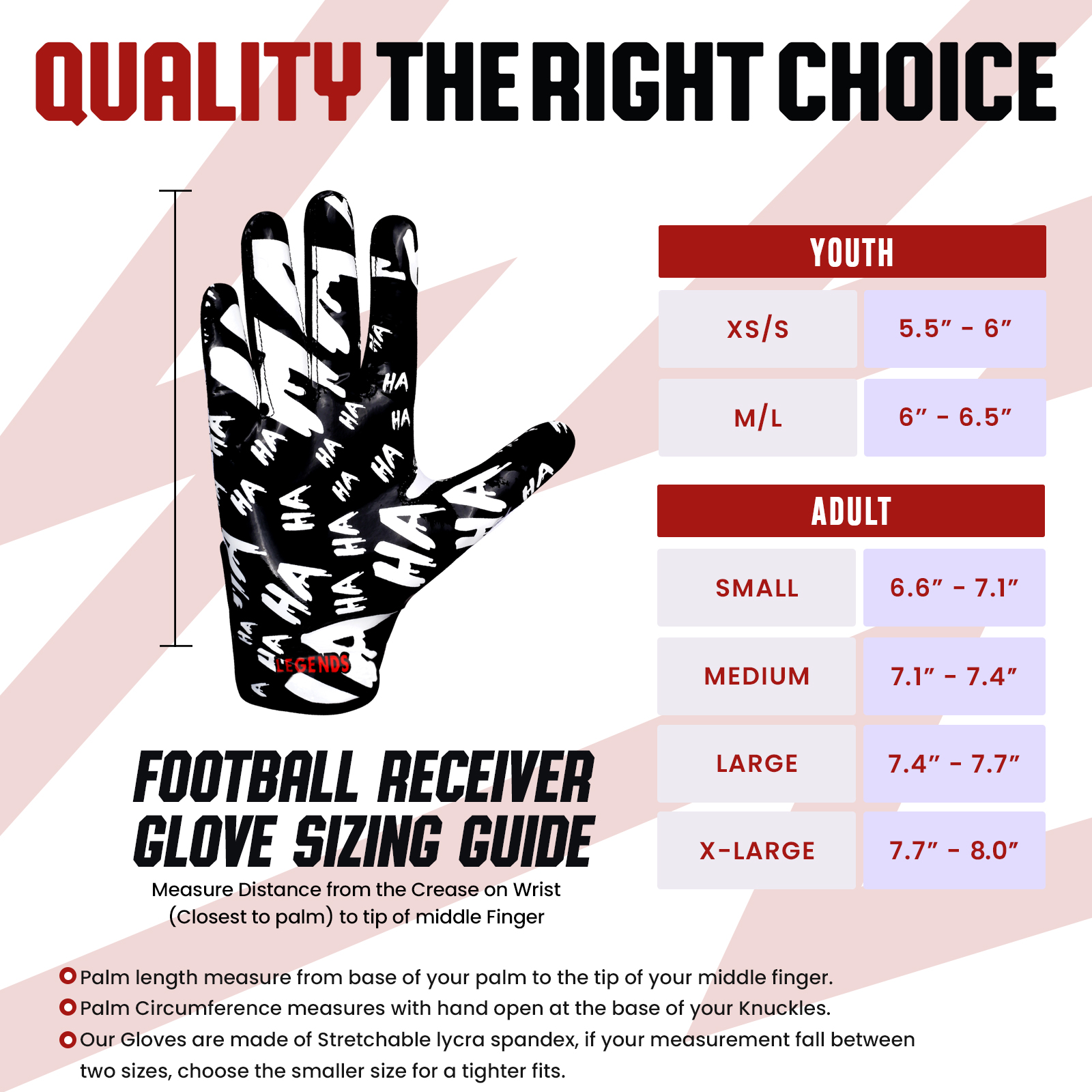
Football gloves work by creating friction between the silicone grip surface and the football’s surface. When a glove fits correctly, the silicone lies flat against the hand and makes full contact with the ball. When a glove is too large, the silicone wrinkles and puckers — dramatically reducing the effective grip area.
⭐⭐⭐⭐⭐ 1,049 Amazon Reviews · 4.7 Stars
LISAAZ Football Gloves — Sticky Grip That Actually Locks On
Youth XS → Adult XL · All-weather silicone grip · Machine wash safe · Ships fast from US
Shop on Amazon →Browse All StylesStudies of youth sports performance consistently show that properly fitted equipment improves both performance and confidence. A glove that feels like a second skin lets young players focus on the game — not on adjusting their gear.
How to Measure Your Child’s Hand for Football Gloves
You’ll need: a soft fabric tape measure (or a strip of paper and a ruler), and about two minutes.
Step 1: Measure Hand Circumference
Have your child hold their dominant hand flat, fingers together, thumb out to the side. Wrap the tape measure around the widest part of the palm — this is just below the knuckles, not including the thumb.
Record this measurement in inches. This is your primary sizing number.
Step 2: Measure Hand Length
Measure from the base of the palm (the crease at the wrist) straight up to the tip of the middle finger. Keep the hand flat and fingers together for an accurate reading.
Step 3: Use the Larger of the Two Measurements
If the two measurements point to different sizes, always go with the larger size. A slightly roomier glove is better than one that’s too tight — especially for growing kids. However, “slightly roomier” means one size up at most. Two sizes too large defeats the purpose entirely.
LISAAZ Youth Football Gloves Size Chart
All LISAAZ youth football gloves are available in sizes XS through L, designed specifically for players aged 8–12:
| Size | Hand Circumference | Hand Length | Typical Age Range |
|---|---|---|---|
| XS (Extra Small) | 5.5 – 6.0 inches | 5.5 – 6.0 inches | 6–8 years |
| S (Small) | 6.0 – 6.5 inches | 6.0 – 6.5 inches | 8–9 years |
| M (Medium) | 6.5 – 7.0 inches | 6.5 – 7.0 inches | 9–11 years |
| L (Large) | 7.0 – 7.5 inches | 7.0 – 7.5 inches | 11–13 years |
Important: Age ranges are approximate guidelines only. Always use hand measurements. Two kids of the same age can easily be two sizes apart.
How a Properly Fitted Glove Should Feel
When you first put on correctly sized football gloves, here’s what you should notice:
- Fingertips reach the end of each finger pocket — There should be no excess material bunched at the fingertips, but the fingertips shouldn’t feel squeezed either.
- The wrist strap closes comfortably — You should be able to fasten the velcro strap with a finger’s width of clearance — not tight enough to restrict blood flow, not so loose that the glove can shift during play.
- Fingers can flex naturally — Make a fist. The glove should flex with your hand without pulling or binding. Resistance means the glove is too small.
- No bunching or wrinkling in the palm — Lay the hand flat. The palm material should lay flat against the skin with no folds or loose material.
- The glove stays put when you shake your hand — A properly fitted glove won’t shift or slide when you wave your hand around vigorously.
Signs Your Child Has the Wrong Size
Gloves Are Too Large If:
- Finger pockets have excess material at the tips
- Palm silicone wrinkles when hand is flat
- Glove shifts during play or when shaking hands
- Child complains the glove “feels weird” or keeps adjusting it
- Ball grip feels inconsistent — sometimes sticky, sometimes not
Gloves Are Too Small If:
- Fingers don’t reach the end of the finger pockets (fingers can curl inside a too-small glove)
- Wrist strap doesn’t reach — or barely reaches — the velcro
- Child complains hands feel “tight” or go numb quickly
- Glove is difficult to put on or take off
- Seams dig into fingers or palm
Sizing for Growing Kids: When to Go Up a Size
Kids grow fast — sometimes half a size in a single season. Here’s how to manage sizing through a season:
- Measure at the start of every season — Don’t assume last year’s gloves still fit. Remeasure before each new season begins.
- Mid-season check — If your child starts complaining about hand discomfort or grip issues, remeasure mid-season. A growth spurt in September can mean last year’s spring purchase no longer fits by October.
- The “one size up” rule for season-end purchases — If you’re buying gloves late in the season for next year, buying one size up is reasonable. Anything more than one size up is too much.
Sizing Differences Between Glove Series
Different glove models can fit slightly differently due to material thickness and construction. Here’s what to know about LISAAZ glove series sizing:
- Ball Feel Sensation (BFS) Series — True to size. The ultra-thin construction means the fit chart above is accurate. These run slightly snugger due to the compression-knit back panel.
- Shark Edition Series — True to size, slightly more forgiving in the wrist closure area. Good for kids between sizes.
- Alien Pro Series — True to size. The pre-curved finger design means these feel most natural out of the box.
- Limited Edition Fit (LEFIT) Series — True to size. The reinforced wrist strap runs slightly tighter than other series — if your child is between sizes, size up.
Frequently Asked Questions About Youth Football Glove Sizing
My child wears a youth medium in other sports gloves. Will that be a medium in football gloves too?
Not necessarily. Football glove sizing varies by brand and doesn’t always match baseball, soccer, or basketball glove sizing. Always use the hand measurements above rather than relying on sizes from other sports.
Should football gloves feel tight when new?
Slightly snug is normal and expected — the materials will break in and stretch slightly over the first few uses. However, tight enough to restrict circulation or cause discomfort immediately is too small. The glove should feel snug but not uncomfortable right out of the package.
Can my child wear the same gloves for multiple seasons?
Only if the fit still checks out. Gloves stretch with use, and children’s hands grow quickly. Re-measure at the start of every season. If the gloves have stretched beyond a half-size or feel loose at the wrist, it’s time for a new pair.
What if my child’s hand measurement falls between two sizes?
Size up. A slightly larger glove allows for growth and breaks in more comfortably than one that’s too snug. The exception is lineman gloves, which benefit from a tighter fit for grip strength — in that case, size down.
Ready to Find the Right Fit?
Now that you know exactly how to measure, finding the right LISAAZ youth football gloves is straightforward. Every glove in our lineup comes in sizes XS–L and is designed specifically for players aged 8–12.
Browse all LISAAZ youth football gloves and use this guide to order with confidence — or check out our complete buying guide if you still have questions about which series is right for your player’s position and style.
Related Guides
- Youth Football Gloves Buying Guide 2025 — Everything parents need to know about grip, fit, materials, and position-specific gloves.
- Shop All LISAAZ Youth Football Gloves — Browse our full range of youth receiver gloves in sizes XS–L.